Things You Can Expect From Your ABA Provider
When you received your child’s autism spectrum disorder diagnosis, your mind was probably racing with a million questions: What does this mean for my child? How can I support them efficiently? Receiving the diagnosis can be overwhelming and emotional, especially after you spend hours researching and seeking services and additional resources.
Finding a high-quality Applied Behavior Analysis (ABA) therapy center is vital for your child’s success. The right clinic can change your child’s life and your family’s. Through a quality center, you and your child will receive proper training and techniques that you can use at home and in unfamiliar settings.
While searching, you may find several ABA clinic options, but you should be selective to ensure that you find the best center for your child. The provider you choose will have a hand in safeguarding your child. As a parent, it’s important that you ask yourself if you trust the clinic to be a key partner in your child’s development and growing experiences.
At HANDS, we commit to ensuring that children with autism and their parents have the best resources available. We’ve put together a list of six things to expect from an ABA provider to ensure you make the best decision for your family.
How Does ABA Therapy Work?
Applied Behavior Analysis (ABA) is a therapy based on the science of behavior and learning. This therapy involves working with a registered behavior technician (RBT) who will help your child learn life skills that help them gain independence. ABA therapy also focuses on building social skills and reducing challenging behaviors, including self-harming or tantrums.
A behavioral technician also works with a board-certified behavioral analyst (BCBA) to help gather information about your child’s strengths and where areas of opportunity lie. They will have a hand in creating individualized assessments and therapy sessions to ensure that your child receives the proper help. Sessions may occur once or several times a week and could include varying levels of involvement from parents or caregivers.
We want to remind parents that there is no cure for autism spectrum disorder. Still, many find that ABA therapy improves developmental skills, such as social, behavioral, communication, and play skills. However, the process takes time, consistency, patience, and realistic goal-setting to be effective.
What’s the Aim of ABA Therapy?
ABA therapy techniques help your child build developmental skills, including:
- Increased independence and social skills
- Improved communication skills (verbal and non-verbal methods)
- Increased adaptive and self-soothing skills
- Decreased behavioral challenges
ABA therapy can also help parents and caregivers better understand their child’s behaviors and learn more ways to cater to and support them. With the help of you and our professional team, your child can:
- Communicate more effectively
- Learn how to make friends easier
- Thrive in familiar and unfamiliar settings
What To Expect From Center-Based ABA Therapy
Finding the perfect ABA therapy center is not a task to take lightly. Unfortunately, many families don’t know what to expect or look for searching for an ABA provider. Below are six things you can expect from your ABA provider; understanding these factors should aid your decision-making process.
Research-Based Techniques
The ABA therapy center should provide individualized treatments that they researched in a single-subject design. Humans are all different. We all have our strengths and challenges. Therefore, a treatment that works for one child may not work for another. So, your child’s ABA center must work directly with them to ensure they’re meeting their unique goals.
When conducting research, professionals will identify common traits among learners and replicate the research. The interventions that the center’s team implements must stem from an accredited study.
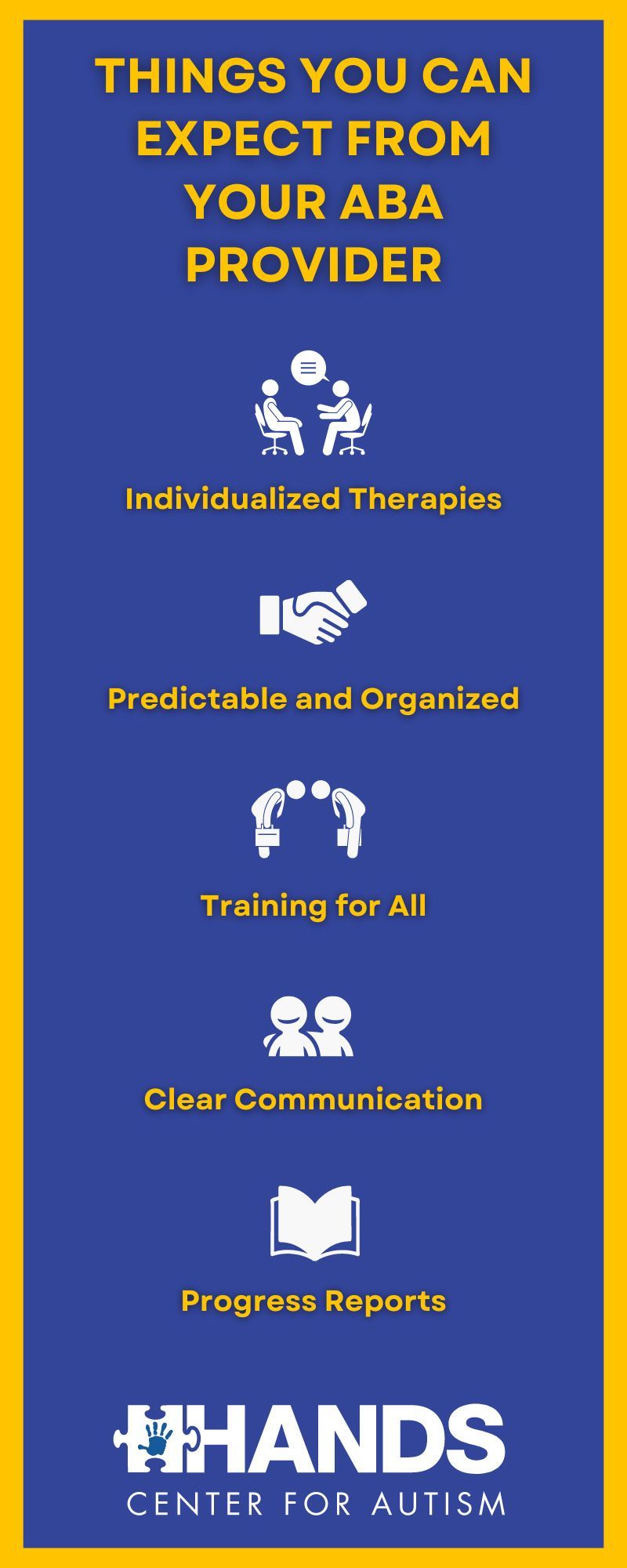
Individualized Therapies
“Cookie cutter” programs will not work for most children with autism. Just because two 6-year-old children may have similar skill levels doesn’t mean the same techniques will work for both. The therapy center’s behavior technicians must work hard to determine the best goals and interventions that will move your child toward mastery.
Predictable and Organized
Children with autism thrive when they have a routine. Ensure your child’s ABA therapy sessions are similar regardless of the present therapist. If there’s a change to the routine, the center should communicate that to you and your child so that you can adjust accordingly.
Training for All
Although ABA programs aim to help your child master developmental and behavioral skills, your child’s therapy center should always encourage you and your family to continue these teachings at home. It’s important that your child can demonstrate their skills in the presence of a therapist and in other settings.
The professionals should include the parents and caregivers in sessions to demonstrate different activities and techniques that you can implement outside the center. This way, your child will be able to retain the information more, and you will have more knowledge on how to understand and support them.
Clear Communication
If you enroll your child in ABA, you should expect that you can come and observe a session at any time. Needing to schedule an observation or only seeing your child in one room the entire time can be red flags. The ABA therapy center should uphold an open-door policy and communicate clearly.
Communication is key for all relationships to work. At a minimum, your child’s therapists should provide weekly information about your child’s progress, center announcements, program updates, or any information regarding the ABA center.
Progress Reports
Every session will allow your child’s therapist to record any data about their behavior, forms of communication, social skills, responses, and more. They should review this data daily to see if there’s a desired trend. The center should also give you easy access to this data so that you can see what skills to work on at home.
How Can We Help?
Great ABA providers understand the importance of creating an atmosphere and providing programs that foster the best outcomes for their learners. At HANDS, we are an autism therapy center in North Carolina that believes in embracing our learners by providing the highest standard of care. Through education, support, and advocacy, we can help your child live a fulfilling and independent life.