
5 Benefits of ABA Therapy for Children With Autism
Just like any good parent, you want the best life possible for your child. While children with autism spectrum disorder present unique challenges when it comes to parenting and ensuring their happiness, you have plenty of options to help your child through their struggles and ensure that they live fulfilling lives. Perhaps the only strategy that’s recommended to assist children with autism and their parents is known as Applied Behavior Analysis therapy, or ABA therapy. The techniques you and your child learn through applied behavior analysis aren’t just quick fixes; rather, they set up your child for success and happiness for the rest of their lives.
In terms of therapeutic treatments and strategies, ABA therapy has a plethora of empirical evidence and scientific backing to suggest that it’s one of the best options for both you and your child. It’s been in development for decades now, changing over time to what we have today—an effective and long-term treatment plan to positively change the lives of children with autism and their parents. In this article, we’ll look a little deeper into the benefits of ABA therapy for children with autism, as well as explore what exactly the therapy might entail and how it can help you as a parent.
What Is ABA Therapy?
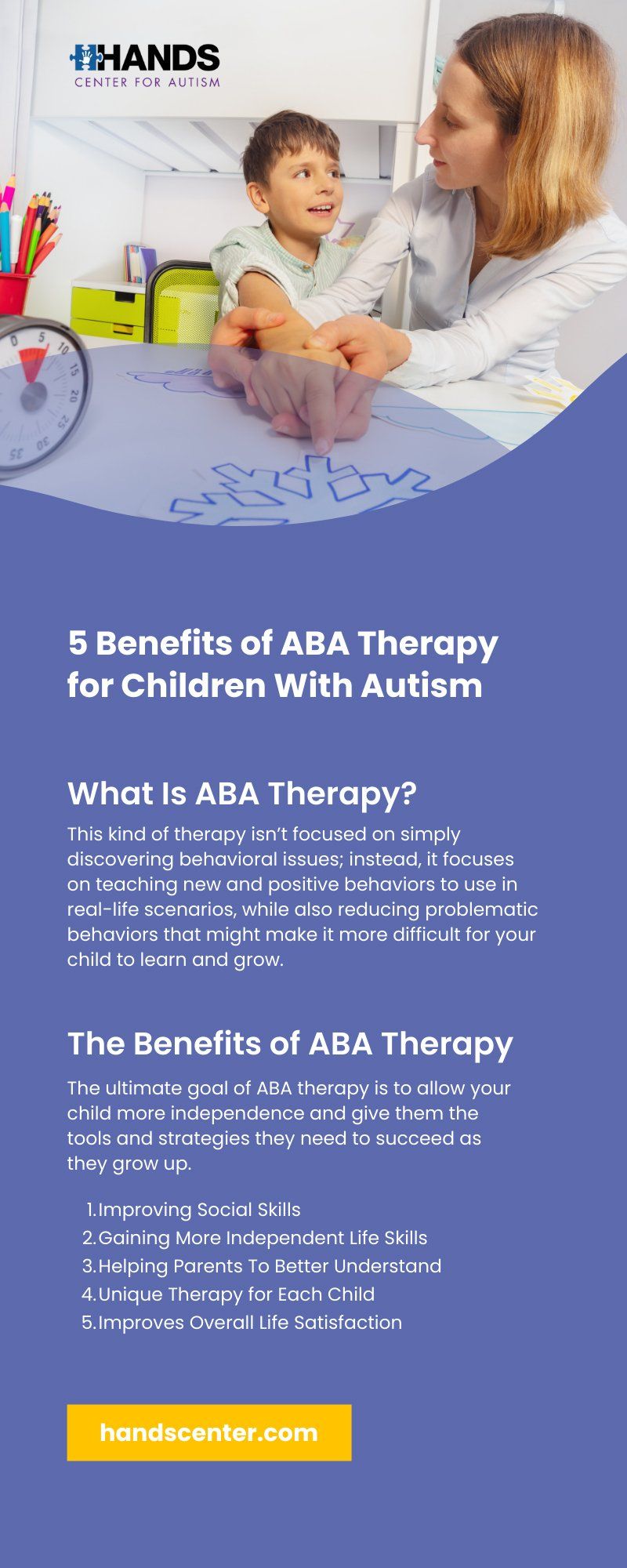
ABA therapy finds its roots in the science behind how we as humans learn new things and how we can alter behaviors in ourselves and in others. The “applied” part of the therapy is very important. This kind of therapy isn’t focused on simply discovering behavioral issues; instead, it focuses on teaching new and positive behaviors to use in real-life scenarios, while also reducing problematic behaviors that might make it more difficult for your child to learn and grow.
How Does ABA Therapy Work?
This kind of therapy is very flexible in its approach to each child. One of the core tenets of ABA therapy is positive reinforcement. Positive reinforcement says that when we reward a certain behavior that we want to see repeated, the reward makes it more likely that that behavior will repeat in the future. This positive behavior followed by a reward method is far more likely to encourage the behavior we want to see, especially compared to a more punitive method that enacts a punishment for undesired behaviors such as negative reinforcement.
The Benefits of ABA Therapy
The ultimate goal of ABA therapy is to allow your child more independence and give them the tools and strategies they need to succeed as they grow up. You can also say that one of the overarching goals is to allow your child to better understand neurotypical behavior so they can connect with others on a deeper level and be a more involved member of society.
There are plenty of other benefits of ABA therapy for children with autism and their parents. We’ll show you some of the specifics right here so you can make an informed decision on whether it sounds like something you would want to try.
Improving Social Skills
Children with autism can often find themselves without the necessary coping mechanisms and social skills to deal with other people in a positive way. This can make making friends their age, as well as getting along with others, more difficult. ABA therapy focuses on teaching your child behaviors that make interacting with others, both children their age and adults, a more positive experience for everyone involved. ABA therapy can help introduce your child to basic social cues and help them with communication skills such as making eye contact and carrying conversations. These kinds of social skills make being a kid much more enjoyable, no matter where your child might fall on the autism spectrum.
Gaining More Independent Life Skills
Children with autism usually need extra assistance in developing skills that allow them to live more independently from their parents. ABA therapy is the best way to teach your child with autism how to be independent. Skills such as self-grooming, sleeping through the night without waking, using the bathroom on their own, and other self-care skills go a long way towards making your child more independent and reducing their dependency on your assistance. Your ABA therapist can help you determine the best methods for safely giving your child more autonomy.
Helping Parents To Better Understand
Being a parent of a child with autism can come with extra challenges that parents of neurotypical children may not understand. ABA therapy isn’t only for your child; it also teaches you as the parent how you can better understand your child’s needs and how to better prepare them for life going forward. Your ABA therapist will work with you on what you and child struggle with the most. Children with autism aren’t always able to communicate what they need, but ABA therapy can give you the skills to understand their needs on a deeper level that’s otherwise hard to achieve.
Unique Therapy for Each Child
ABA therapy isn’t a one-size-fits-all program. Just as every child is unique, so too is every child with autism, and every child’s situation is unique. ABA therapy is flexible and is wholly unique to you and your child. We adapt your treatment plan to fit into your life while addressing the majority of concerns you have. Your therapy might need to take place at school or in your own home, and ABA therapy accounts for this as well. You will also get to decide whether one-on-one therapy is best, or if you’d rather prefer group therapy.
Consistency and Structure
Children with autism often thrive when given consistency and predictable routines. Another benefit of ABA therapy is that it provides the structure that’s necessary for success, thanks to its regular sessions and consistent reinforcement of positive behaviors and skills. This not only helps children stay on track but also provides a sense of stability and security in their daily lives.
Improves Overall Life Satisfaction
What it really comes down to is that ABA therapy is the only treatment plan recommended to parents of children with autism because it’s been proven to improve the quality of life of everyone involved time and time again. Many parents who go through ABA therapy with their child will see them develop in ways they never expected. A good ABA curriculum can help your child achieve their own goals and be truly satisfied with the life they live.
For families embarking on this therapeutic venture, the benefits of ABA therapy can be both profound and far-reaching. The HANDS Center for Autism is proud to be able to provide ABA therapy in North Carolina for parents who want to support their child with autism to their best ability. If you have any questions about what the therapy entails or how it can address a certain issue that you’re struggling with, please don’t hesitate to contact us, so we can start setting up your child for a life of success.